
"coffee harvest process"
10000 article(s) found
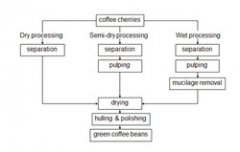
A brief introduction to the processing process of coffee beans
Recently, the harvest of coffee has been fully spread out in Yunnan. I think it's time to pick out some of the blog posts I've posted. I've been planning this for a long time. Almost a year ago, I posted a blog called "Harvest Rewards". It's about several ways to harvest coffee in this area. The coffee fruit should be peeled within 8 hours after picking, otherwise

The harvest and production process of coffee
The collection time is different in different countries and regions. The harvest process requires a lot of manpower, especially high-quality coffee, which can only pick fully ripe brown coffee peaches. Since all coffee peaches do not ripen at the same time, you need to go back to the same tree many times to pick them. Coffee beans come from a ripe peach called cherrie.

Explain in detail the water washing method of coffee and raw beans: how long is the water washing method? What are the precautions?
Professional coffee knowledge exchange more coffee bean information Please follow the coffee workshop (Wechat official account cafe_style) every coffee producer needs to understand several factors that affect coffee quality, namely, estate management, raw bean processing after coffee harvest, coffee roasting, and coffee brewing. Each of these four stages will affect the quality of coffee. Coffee producers do not have to
Coffee treatment what is the difference between the general washing method and the Kenyan natural fermentation washing method?
Professional coffee knowledge exchange more coffee bean information please follow the coffee workshop (Wechat official account cafe_style) Qianjie Coffee introduction Coffee treatment comparison between general washing method and Kenyan natural fermentation washing method. 1. The first is general washing: [natural fermentation washing treatment A] process: harvesting, peeling, natural fermentation, 12-24 hours washing and sun drying [natural hair]
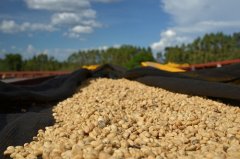
The processing steps of coffee beans how to deal with raw coffee beans
When the coffee berries are ripe, they are usually harvested by manual picking. In some places, only the fully ripe berries are picked, while others are all picked from a single branch. The former is called handpicked and the latter is called strip-picking. Because the ripening time of coffee berries is not consistent, the harvest is likely to be divided into several stages.

Fruit Flavor Kenya Fine Coffee Bean Growing Location Climate Elevation Profile
Bourbon Bourbon was first brought to Kenya for cultivation. In the 1950s, Scott Laboratory, an agricultural research institution at that time, made unremitting efforts to select two excellent hybrids SL-28 and SL-34, overturning the long-standing bias that artificial breeding varieties were not excellent in natural varieties. SL-28 and SL-34 helped Kenyan coffee become unique

Factors affecting the quality of coffee beans in terms of harvest, processing, treatment and storage
The annual winter, that is, the dry season is the harvest time for coffee beans. After three to four years of growth, the coffee trees gradually mature and begin to bear fruit. The fruits are arranged in strings or clumps next to the branches. The coffee beans are wrapped in a red coat and can be picked as soon as they turn red. Most Arabica coffee beans mature in June and August, while Robasta coffee beans mature in September and October, so although

A brief introduction to the cultivation of spicy and unrestrained boutique coffee beans in Kenya, geographical location, climate and altitude
Coffee cultivation in Kenya is mainly divided into two types: large farms (Estate) and cooperatives (Cooperatives). The former generally has a large planting area and has independent coffee processing facilities. Most coffee production is done by a large number of small farmers, who form coffee cooperatives. The Coffee Cooperative Society hired special managers to supervise the coffee handling of its members.

How to treat Yunnan coffee beans
As harvest season draws to a close, I would like to add an overview of the coffee processing process. In this blog post, I will introduce you to the wet processing steps after coffee picking in Yunnan. After harvest, the berries are either sent directly to a pulp collector (if the harvest is done well) or collected in a siphon tank filled with water. Berries are here.

Sowing and harvesting of Coffee
Coffee harvesting (1) hand picking: with the exception of Brazil and Ethiopia, most Arabica coffee producing countries use hand picking. Hand picking involves not only picking ripe bright red coffee fruits, but also sometimes along with immature cyan coffee fruits and branches, so these immature beans are often mixed with refined coffee beans, especially when refined by natural methods. Such as

A brief introduction to the treatment method of grinding degree and baking degree of Kenyan boutique coffee beans with rich taste
Coffee cultivation in Kenya is mainly divided into two types: large farms (Estate) and cooperatives (Cooperatives). The former generally has a large planting area and has independent coffee processing facilities. Most coffee production is done by a large number of small farmers, who form coffee cooperatives. The Coffee Cooperative Society hired special managers to supervise the coffee handling of its members.

The best harvest season for Rwandan coffee cherries
The peak harvest season for Rwandan coffee is during the main rainy season, from March to the end of May. During harvest season, farmers spend most of their day picking coffee by hand. In the afternoon, farmers carry coffee nuts in traditional baskets woven from banana leaves to washing stations hours away. Craftsman hand will be the best quality, with a deep red

Introduction to the processing process of coffee bean picking method
Introduction to the processing process of coffee bean picking method 1. Skin/Pulp: the outermost layer of coffee beans is covered with berry-like skin and pulp. In addition to the natural sun method, coffee beans treated by other methods must remove the skin and flesh within a few hours after picking. For coffee, peel and pulp are important by-products. In some places of origin, people will use

A brief introduction to the Market Price of Fine Coffee Bean varieties in Kenya
Like the choice of other coffee producing countries, although SL-28 and SL-34 have stood the test of time and cultivated generation after generation of faithful pumps for Kenyan coffee, the Kenyan government and the Coffee Research Institute (Coffee Research Foundation) have begun to promote a new variety, Ruiri 11, for the sake of coffee yield and disease resistance.

The harvest and processing process of coffee beans and two basic processing methods
Picking: due to climatic differences, the harvest season is usually from September to March in the Northern Hemisphere and from April to August in the Southern Hemisphere. When the coffee beans are ripe, they can be picked. In many alpine slopes, coffee must be picked manually. In relatively flat producing areas such as Brazil, Australia and Hawaii, they can be picked by machines. These two methods

Introduction to the process of growing, harvesting, processing and processing of coffee beans
The method of picking coffee beans is to spread the coffee cherries widely on the exposure field for two weeks and sweep them with a rake several times a day so that the coffee beans can be dried more evenly. When dried, the coffee beans are separated from the skin, and the dried pulp and peel are removed by a sheller, then screened and divided into different grades. The best quality coffee can be produced by washing or drying.

The handling and grading system of raw coffee beans? How many kinds of raw beans are classified? How about coffee and raw beans?
Professional coffee knowledge exchange more coffee bean information please follow the coffee workshop (Wechat official account cafe_style) coffee raw bean handling and grading system? How many kinds of raw beans are classified? How to store raw coffee beans? When the coffee beans are harvested and treated layer by layer, they are properly dried and stored in a warehouse containing sheepskin for about 24 months, and fresh batches are obtained in the current season.
Steps of wet treatment of coffee after picking
As the harvest season is almost over, I would like to add an overview of the coffee processing process. In this blog post, I will introduce to you the steps of wet treatment in Yunnan after coffee picking. After harvest, the berries are either sent directly to the pulp collector (if the harvest is done well), or concentrated in a siphon tank filled with water. The berries are here.

Introduction to the characteristics of Brazilian Coffee harvesting and processing ability Brand Flavor description
Brazilian Coffee harvesting and processing ability Brand Flavor description Taste introduction although coffee is diverse, Brazilian coffee is suitable for the taste of the public. For example, coffee produced in the northern coastal areas has a typical iodine taste, reminiscent of the sea after drinking. This coffee is exported to North America, the Middle East and Eastern Europe. Another kind of coffee that is interesting and worth looking for is washed.

A brief introduction to the Market Price of Fruit-flavored Fine Coffee Bean varieties in Kenya
Bourbon Bourbon was first brought to Kenya for planting. In the 1950s, the then agricultural research institution Scott Laboratory selected two excellent hybrids, SL-28 and SL-34, through unremitting efforts, subverting the long-standing prejudice of artificial breeding without excellent natural varieties. SL-28 and SL-34 helped Kenyan Coffee form its own unique